
WMC WATER MANAGEMENT
Boiler Water Treatment Services
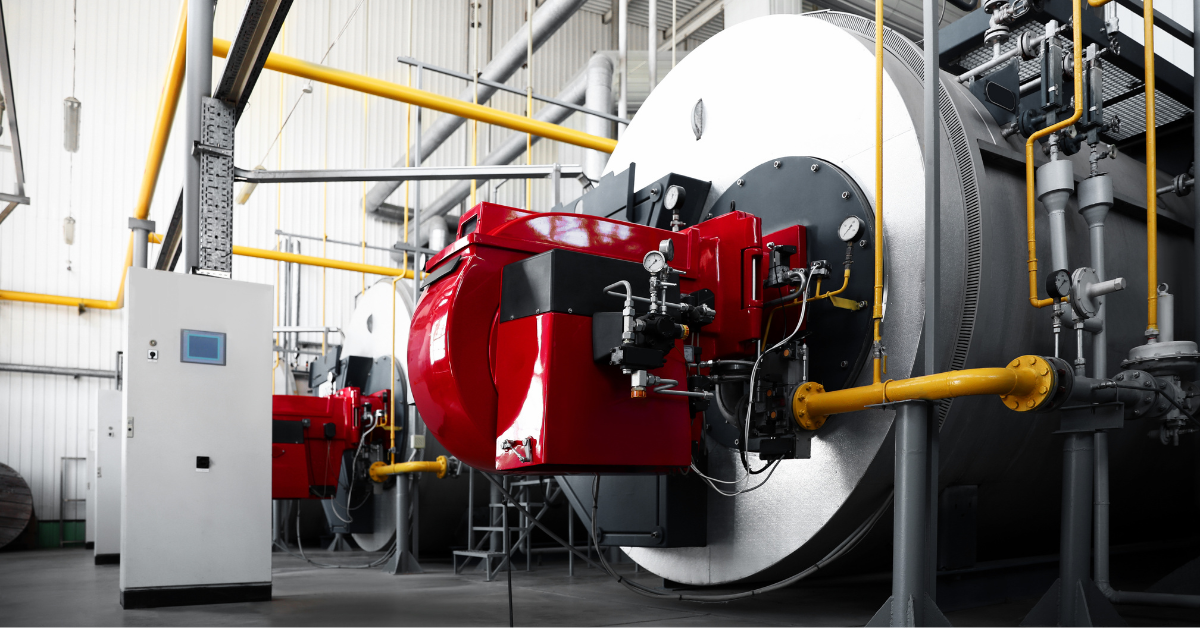
Globally, a pivotal element in industrial processes is the boiler—a fundamental component that generates steam for a wide range of applications, including comfort heating, domestic water heating, precise temperature control, and various other applications.
Businesses across a number of industries including food and beverage, healthcare facilities and manufacturing plants highly depend on boilers as an essential component in their water treatment in their process.
Breweries: Boilers are indispensable for breweries, ensuring quick, even heating for quality product outcomes. Steam heating helps maintain optimal temperatures for smooth processing, ensuring optimal reactions for the desired flavors in their brews. By maximizing steam efficiency in the brewing process it lowers overall fuel costs and reduces the cost per barrel.
Food Processing Facilities: Boilers play a vital role in sterilizing, heating, and pasteurizing food and beverage products, contributing to processes like drying and cooking. Boilers help food and beverage manufacturers achieve the highest level of quality in their products while optimizing production.
Healthcare Facilities: Hospitals rely on boilers for tasks such as space heating, kitchen operations, laundry, steam and hot water for sterilization procedures, and other critical functions. The health, safety and comfort of patients is the number one priority and we are proud to offer essential healthcare facilities with boiler water treatment services.
Manufacturing Businesses: Boilers are a necessity in manufacturing, generating steam to maintain precise production temperatures. Whether its an automotive, parts, electronics, glass, textiles or other, our professional engineers find boiler water treatment solutions that meet your unique needs and maximize the effectiveness of your production.
Given the critical nature of these applications, it's imperative to maintain boilers for longevity and reliability. Fortunately, WMC Water Management offers the consistent care and attention your industrial boiler demands. We specialize in ongoing chemical water treatments for boilers, closed-loop systems, and cooling towers.
We work with you to develop a tailored treatment program to prevent scale and corrosion buildup in your boiler, aiming to maximize system performance and efficiency. This proactive approach increases uptime, enhances performance and reduces costs to operate your facility.
.png "wmc - website photos (2)")
Benefits Of Boiler Water Treatment
Regular boiler water treatment offers long-term benefits, helping to:
Optimize energy efficiency: A clean, well-maintained boiler produces steam more efficiently, reducing unnecessary energy usage.
Lower Costs: Reduced fuel and energy wastage result in lower monthly utility bills, with fewer repairs needed for an efficient boiler system.
Maximize Productivity and Minimize Downtime: A well-maintained boiler ensures more uptime and greater productivity for your facility.
Extend Boiler Service Life: Professional treatment reduces the risk of premature damage and failure, increasing the boiler's service life.
Boiler Water Treatment for Scale & Corrosion
Boiler maintenance primarily revolves around addressing scale and corrosion concerns.
Boiler Scale & Corrosion
Scale, composed of materials like calcium, silica, and iron, forms when impurities precipitate out of the water, concentrating and hardening onto the boiler's heat transfer surfaces. Corrosion, arising from reactions between chemicals in the air or water and the boiler's metal, can result in pits and wear, leading to various issues including:
Reduced Efficiency: Scale deposits insulate, decreasing heat transfer efficiency and overall boiler efficiency. Corrosion can create holes, causing leakage and machine shutdowns for repairs.
Higher Costs: Reduced heat transfer efficiency requires more fuel to produce steam, leading to increased costs and greenhouse gas emissions. Corrosion leads to increased repair and replacement costs, affecting productivity and profitability.
Overheating: Scale deposits can cause overheating or failure by interrupting water flow in the tubes.
Shorter Lifespan: Corrosion, if untreated, progressively reduces efficiency, ultimately shortening the boiler's service life.
Both scale and corrosion pose significant threats to industrial boiler systems. To ensure your boiler remains corrosion- and scale-free, you need the right water treatment equipment and chemicals. WMC Water Management has Professional engineers who provide the equipment, products, and expertise to safeguard your boiler and other essential components of your steam system.
Our Boiler Water Treatment Services to Battle Scale & Corrosion
.jpg "Untitled design (24)")
Blowdowns: Limits dissolved minerals by draining feedwater from the boiler, maintaining appropriate concentration cycles.
Chemical Treatment for Scale: Utilizes chemical additives to treat boiler feedwater, creating a reaction that consumes scale-forming minerals.
Chemical Treatment for Corrosion: Uses sulfite as an oxygen scavenger to absorb high levels of dissolved oxygen.
Products and Equipment: Utilizes various treatment products and equipment, such as controllers, corrosion coupon racks, and boiler probes, to disperse precipitated crystals and particulates.
A Proactive, Managed Approach to Boiler Water Treatment
Industrial and commercial facilities benefit from consistent monitoring of boiler water treatment. WMC Water Management supports facilities across Ontario and Quebec with engineered programs designed for both single-site operations and multi-location portfolios.
Customized Boiler Water Treatment Programs
How are boiler water treatment programs customized?
Boiler systems differ based on:
- Operating pressure and temperature
- Feedwater chemistry
- Steam demand
- System design and metallurgy
A high-pressure industrial boiler requires different control parameters than a low-pressure heating system. Variations in makeup water quality also change scaling and corrosion risk.
WMC designs site-specific water boiler treatment programs, which include:
- Targeted chemical selection and dosing
- Defined control ranges for conductivity, pH, and oxygen
- Blowdown optimization
- Monitoring and reporting protocols
Each program aligns with system requirements and maintains consistency across multiple facilities.
Ongoing Monitoring, Testing & Local Service Support
How often should treatment programs be monitored?
Boiler treatment requires routine testing and performance verification. Programs are adjusted as operating conditions change.
WMC Water Management provides:
- Scheduled on-site testing
- Water sampling and analysis
- Trend tracking
- Data-driven program adjustments
Regional service teams across Ontario and Quebec deliver support to maintain stable operating conditions and reduce variability
Improving Boiler Efficiency, Reliability & System Life Across Locations
How does proactive treatment improve reliability?
Uncontrolled scale and corrosion reduce heat-transfer efficiency and increase the risk of failure. A managed program helps facilities:
- Maintain stable heat transfer
- Reduce unplanned downtime
- Extend equipment service life
- Stabilize fuel consumption
For multi-site organizations, standardized oversight improves reporting consistency and operational control across locations.
Boiler Water Treatment Within a Complete Water Management Strategy
How does boiler treatment fit within broader water management?
Boilers operate alongside cooling towers and closed-loop systems. WMC integrates these systems under coordinated water management programs that may include:
- Cooling tower treatment
- Closed-loop programs
- Feedwater pre-treatment
- Laboratory analysis
Managing boilers within a comprehensive strategy ensures safety standards are met. Preventing risks of legionella, aligning with wastewater treatment requirements, and supporting long-term system reliability across facilities.



.png?width=1620&name=wmc%20-%20logos%20footers%20(1).png "wmc - logos footers (1)")